
Digital archive on
the Nile & Qursaya island’s
research
Authored by Sara Abdallah
General Information on Qorsaya Island

Roger Anis — “Fishermen of Qorsaya” , 2025:
Type: Scientific article, field research
Link: https://flows.hypotheses.org/14610
Summary:
- Qorsaya’s community was founded by eight fishing families.
- Pollution and fish scarcity push fishermen to work with VeryNile collecting plastics.
- The study highlights health issues linked to water contamination and gendered social roles.
Roger Anis — “The Nile” , 2025 Type:
Type: Visual ethnography and participatory artistic research
Link: https://www.rogeranis.photo/the-nile
Summary:
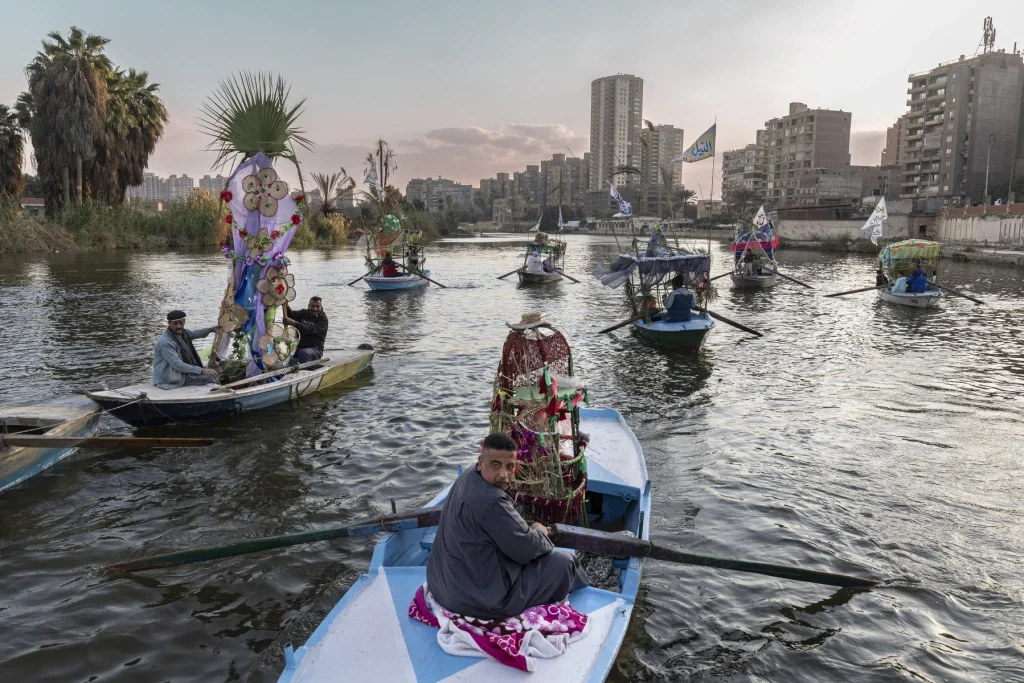
- For the Nile parade, twenty fishermen from Qorsaya Island participated in a community art event and the musician Youssra El Hawwary led a creative workshop with fishermen’s children, who composed and performed a song
- The parade offered a space for fishermen to express their emotional connections to the Nile, strengthening community identity.
- In a drawing exercise, 8 out of 30 participants depicted the Nile dredger, seen as the main threat to fishing because it destroys fish habitats and eggs while failing to clean the river effectively.
- The invasive Nile crayfish, once seen as an ecological threat, has become a vital economic resource for the fishermen.
Roger Anis — Where is the Bride of the Nile ?
Type: academic research / thesis
Link: not published yet
Summary:
- Investigates how the Nile lost its sacredness and how to restore it through community narratives.
- Qorsaya functions as a microcosm of the river itself.
- Pollution issues, the presence of microplastics, and fishermen’s testimonies all illustrate the environmental pressures affecting the island.
- The government’s “Cairo 2050” plan envisions transforming the Nile islands into business hubs, raising concerns among local communities.
- At the same time, the revival of the Nile Parade and the reinterpretation of the “Bride of the Nile” myth signal renewed cultural engagement with the river.
- VeryNile also plays a significant role in driving both environmental and social change in the area.
Qursaya Island. Resilient communities along the Nile, 2024
Type: Ethnographic and socio-economic field notes
Summary:
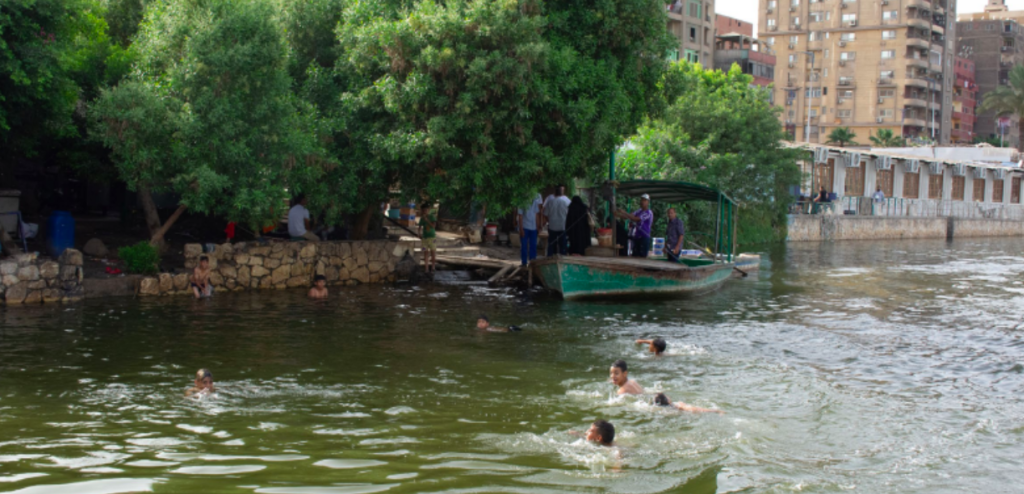
- The island is primarily occupied through farming, fishing, crafts, and transport activities
- Communities exhibit strong social cohesion, although they face a lack of schools, markets and hospitals.
- Health issues are prevalent, often linked to stagnant water and the use of pesticides.
- Women are increasingly taking on prominent roles, contributing to a perception of growing gender equality.
- Residents are legally vulnerable due to undocumented land ownership. Despite these challenges, they propose initiatives aimed at sustainable development.
Natural Resources, Water, and Environment
Amaal M. Abdel-Satar — “Indices of water quality and metal pollution of Nile River, Egypt”, 2017
Type: Scientific article, water-quality & pollution study
Summary:
- This 2017 article examines the water quality of the Nile River in Egypt along 24 sampling sites between Aswan and Cairo to evaluate suitability for drinking water and aquatic life.
- Areas affected by urban, agricultural, and industrial wastewater discharges display marked degradation, with elevated concentrations of heavy metals that in some locations exceed safe limits for both human and ecological health.
- Results indicate that, for aquatic life, many stretches of the Nile fall into “poor to marginal” quality classes, signalling ecological risk. For drinking purposes, water quality ranges from “marginal to good,” depending on pollution levels and proximity to discharge points.
- The authors warn that reduced river flow — for example due to upstream dam construction — could intensify pollution problems by lowering the river’s natural dilution and self-purification capacity, leading to higher concentrations of contaminants downstream.
Greenpeace — “A sea of plastic… The invisible pollution”, 2025
Type: Documentary video and oral testimonies
Link: https://www.youtube.com/watch?
Summary:
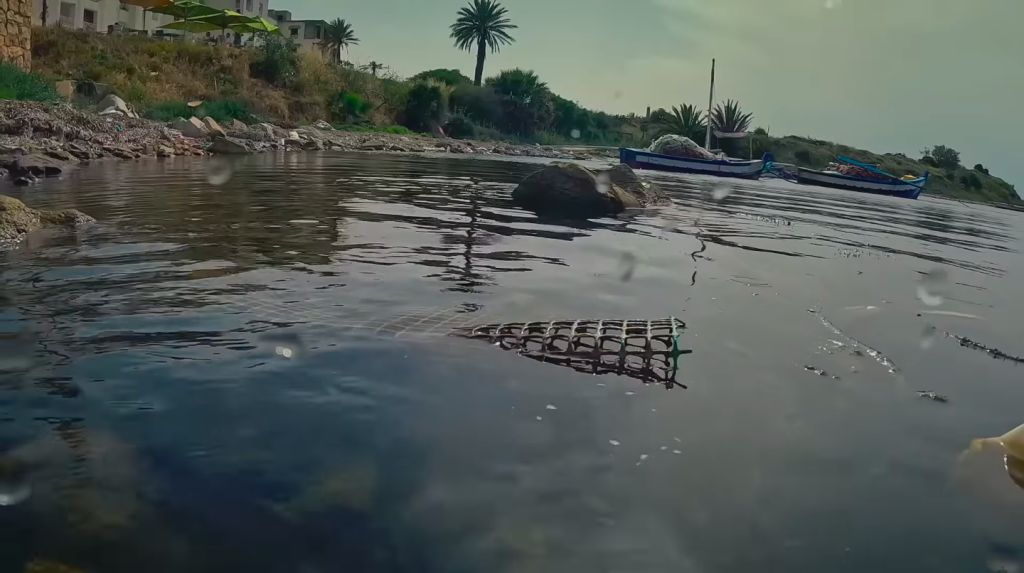
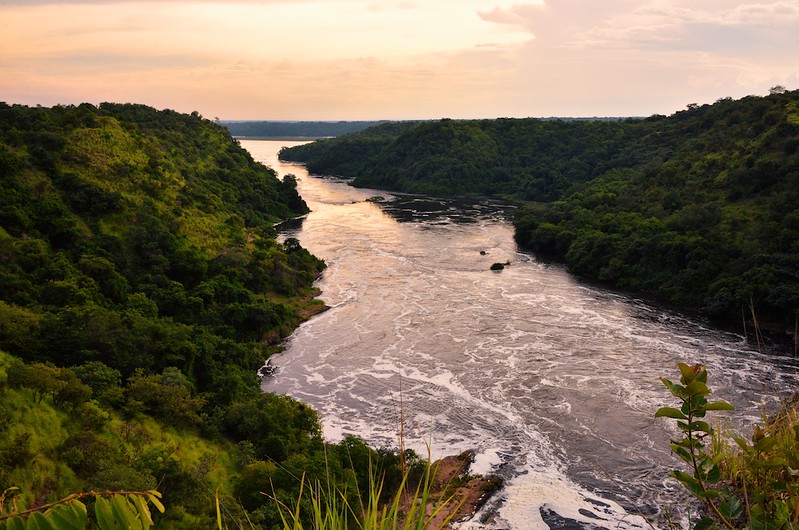
- Fishermen and experts describe the Nile’s degradation and pollution:
- Plastic waste accumulation and biodiversity loss.
- The VeryNile initiative collects 30–35 tons of plastic monthly.
- Environmental scientists warn about microplastics found in human organs.
Hegab, MH, El Sayed, SM, Ahmed, NM et al. — “Evaluating the spatial pattern of water quality of the Nile River, Egypt, through multivariate analysis of chemical and biological indicators”, 2025
Type: Scientific article, environmental water-quality study
Link: https://www.nature.com/articles/
Summary:
- This 2025 study assesses the water quality of the Nile river by sampling 28 sites along its course during winter and summer 2022, using both chemical/physical parameters and biological indicators.
- Based on multivariate analysis, sampling sites cluster into spatial groups, reflecting a gradient of water quality: southern sites exhibit highest transparency and lowest pollutants, while northern sites record higher nutrient and pollutant levels.
- Overall, the study concludes that the Nile’s water quality has improved compared to past surveys — likely due to increased water level, dilution effects, self-purification, and possibly treatment of wastewater — though the northern reaches near Cairo remain more impacted, requiring ongoing monitoring and pollution-control efforts.
Mohammed O. Arnous, Ahmed E. El-Rayes, David R. Green — “Hydrosalinity and environmental land degradation assessment of the East Nile Delta region, Egypt”, 2015
Type: Environmental degradation and soil–water salinity assessment
Link: https://www.jstor.org/stable/24761155
Summary:
- The study identifies highly saline soils and salinized groundwater as growing problems, driven by poor drainage, seawater intrusion, and over-irrigation.
- The findings highlight the role of unsustainable irrigation practices, rising groundwater tables, and sea-level rise as key drivers of salinity in coastal and deltaic regions of Egypt.
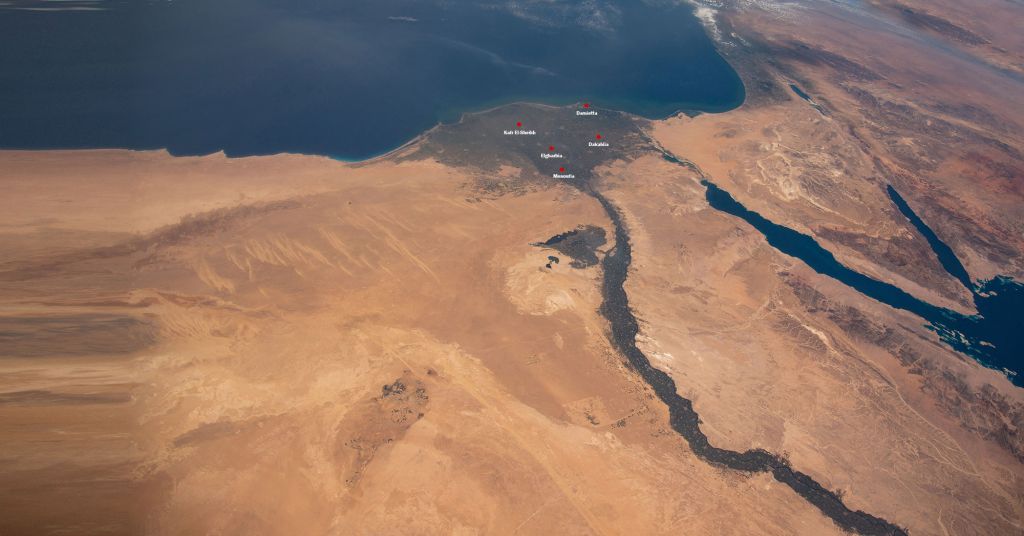
- The analysis also underscores strong regional variation, with the northern Delta being the most affected and the central and southern Delta moderately impacted.
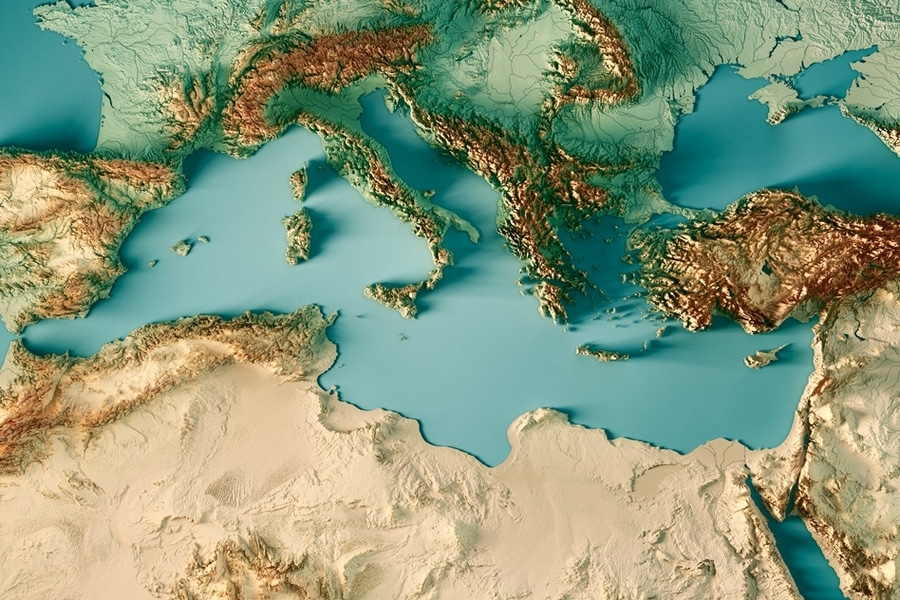
Pedrotti, M.L. & al. — “An integrative assessment of the plastic debris load in the Mediterranean Sea”, 2022
Type: Scientific article on plastic-pollution & environmental assessment study
Link: https://www.sciencedirect.com/science/article
Summary :
- This study assesses the amount of plastic waste present in surface waters by combining several analytical methods to measure the “plastic debris load.” The authors propose an integrative approach: not only counting visible plastics or macro-debris but also analyzing microplastics and their distribution.
- The results show that the plastic load is significant and varies across the sites studied, highlighting areas of high plastic pollution.
- The article recommends continuous monitoring and appropriate management measures—reducing plastic inputs, cleanup efforts, and recycling—to limit the impact on aquatic ecosystems.
State of the River Nile Basin Report, 2020
Type: Basin status, water-security and water-resource assessment
Link: https://adelphi.de/de/system/files
Summary:
- The report assesses basin-wide water security, including water availability, quality, and usage for households, agriculture, industry, and ecosystems.
- Population growth and rising irrigation demand intensify pressure on water resources; agriculture remains by far the largest consumer of renewable water in the basin.
- It highlights the challenges posed by hydrological variability, over-extraction, and the degradation of rivers, wetlands, and groundwater systems.
- It provides a set of biophysical and socio-economic indicators to track the “health” of the basin supporting planning and evidence-based management
Social Conflict
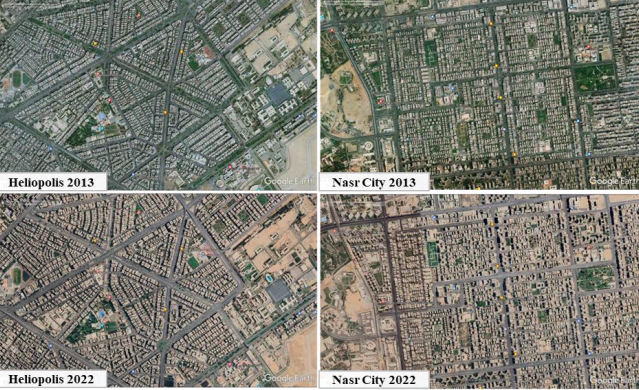
Aya Elsisy — “Understanding Land Value through Investigating Redevelopment of Informal Areas in Egypt” , 2024
Type: PhD thesis, urban studies
Link: https://etheses.whiterose.ac.uk/id
Summary:
- This dissertation examines how land value is conceived, produced, and contested in redevelopment projects targeting informal urban areas in Egypt.
- Elsisy analyses the roles of state agencies, developers, planners, and residents, showing that “value” extends beyond the economic to include social, political, and institutional dimensions that shape how land is reassessed and redistributed.
- The thesis argues that redevelopment often formalizes and commodifies land in ways that marginalize original inhabitants — weakening their tenure, erasing socially embedded informal urban forms, and privileging market- driven models.
- At the same time, Elsisy highlights the complexity of “informality”: these areas are not simply unplanned slums but dynamic socio-spatial systems with their own land-use logic and survival strategies.
- The work calls for more inclusive, context-sensitive urban policies that recognize the multiple values of land, protect residents’ rights, and integrate social justice into development.
Infrastructures
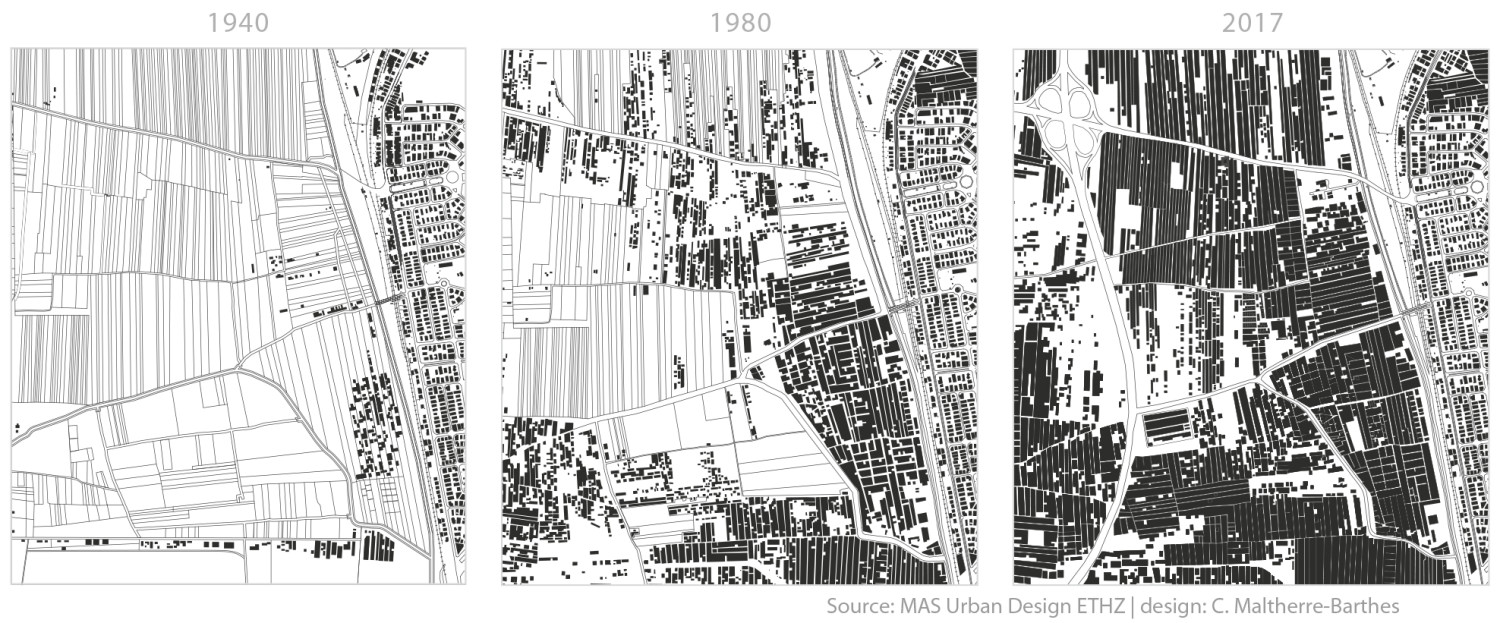
Charlotte Malterre-Barthes — “Urban sprawl on agricultural land”, 2023
Type: Chapter, urban analysis
Link: https://books.openedition.org/
Summary:
- A large portion of Cairo’s informal housing — up to two-thirds of its population — occupies former fertile farmland, often transformed into residential zones without authorization.
- Peripheral agricultural areas or “agricultural islands” like Qursaya, Dahab, or Warraq face growing real estate pressure: land is subdivided into very small plots, sold, and rapidly built on.
- Construction often occurs without permits on formerly cultivable land — irrigation canals are filled in to create streets, and the soil loses its agricultural function.
- Qursaya and similar agricultural islands exemplify a dual issue: the gradual loss of vital farmland for local food production and the social/urban transformation that often dispossesses low-income rural populations of their livelihoods.
Jenna Ashraf Hussein Tawfik — “Resolving Conflicts through Design“, 2025
Type: Architecture thesis, applied research
Link: https://webthesis.biblio.polito.it/
Summary:
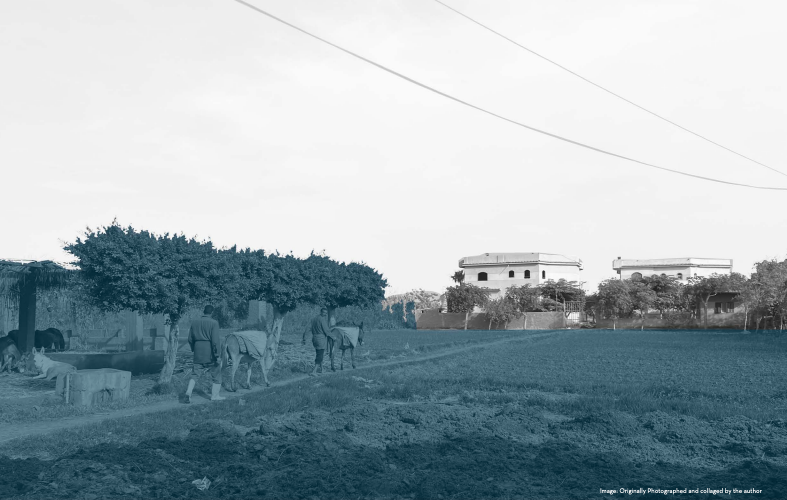
- The project explores Qorsaya as a site of socio-spatial tension.
- It positions architecture as a mediator between the state and the local community.
- It highlights the island’s self-sufficiency, its neglected infrastructure, and its potential for eco-tourism.
- Residents’ testimonies reveal pride, mistrust of authorities, and strong ecological awareness.
“Meeting the Sanitation Needs of Rural Egypt” — GreenPolicyPlatform / UNEP case study, 2022
Type: Best-practice report, water & sanitation in rural Egypt case study
Link: https://www.greenpolicyplatform.org/
Summary:
- This report examines a rural sanitation programme in Egypt designed to improve access to water and sanitation in rural areas. It highlights that lack of decentralised power and institutional capacity had long hindered the construction of adequate sanitation facilities at the local level.
- Through this initiative, rural inhabitants gain improved access to clean water and sanitation, which supports public health, reduces waterborne diseases, and contributes to broader social and environmental development goals.
- The report frames sanitation not just as infrastructure, but as a key component of inclusive development and environmental sustainability — stressing the need for local organisation, governance and adaptation to rural contexts.
Pierre Arnaud Barthel, Agnès Deboulet and Marta Pappalardo — “Cairo 2050” : Entering Global Competition Through Urban Renewal”, 2014
Type: Urban studies, political geography
Link: https://books.openedition.org/pupo/17522
Summary:
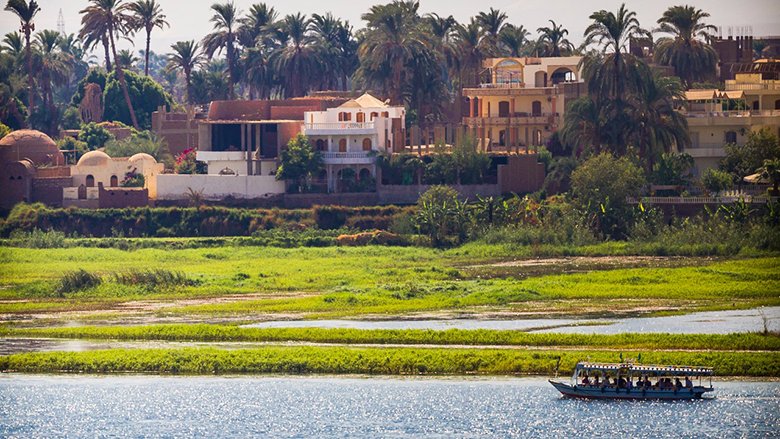
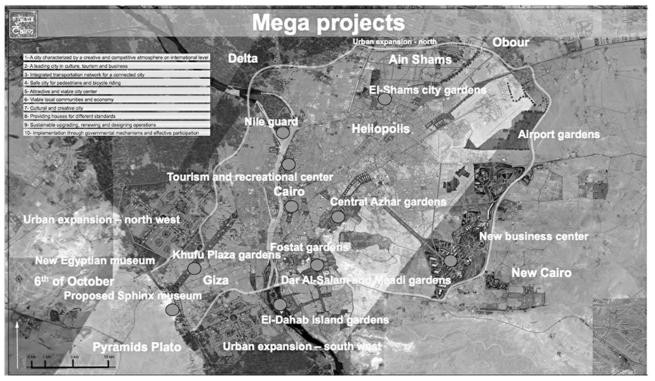
- Authorities target new areas for development (desert peripheries, Nile riverbanks), fueling real-estate speculation.
- Large-scale plans aim to modernize the historic center and transform the Nile waterfront into high-value, profitable urban spaces.Redevelopment frequently results in evictions and the dismantling of working-class neighborhoods.
- Cairo 2050 seeks to position the city within global urban competition but prioritizes profitability over social equity.
- The transformation benefits elites more than local residents, raising concerns about the “right to the city.”